Two-hundred-year-old physics, applied to a modern problem.
The AquaPress is not a new invention so much as an elegant arrangement of principles every engineer already trusts, the same ones behind car brakes and hydraulic lifts.
Pressure travels everywhere, equally.
When pressure is applied to a confined, incompressible fluid, it transmits undiminished to every part of the fluid and the walls of its container. Push on one end of a sealed circuit and the entire system feels it at once.
A bigger piston means a bigger force.
Pressure equals force divided by area. Keep the pressure constant but increase the area of the output piston, and the total output force multiplies. A gentle input becomes a powerful output.
Multiply the effort before it even enters.
Before the fluid is involved, a lever amplifies the force of a single hand. Layered on top of hydraulic advantage, two simple machines compound into a press strong enough to flatten waste.
Force out equals pressure times area.
Expressed simply: P = F / A. Hold the pressure steady, widen the output area, and the output force grows in direct proportion. That single relationship is the entire engine of the AquaPress.
From a school prototype to a sealed product.
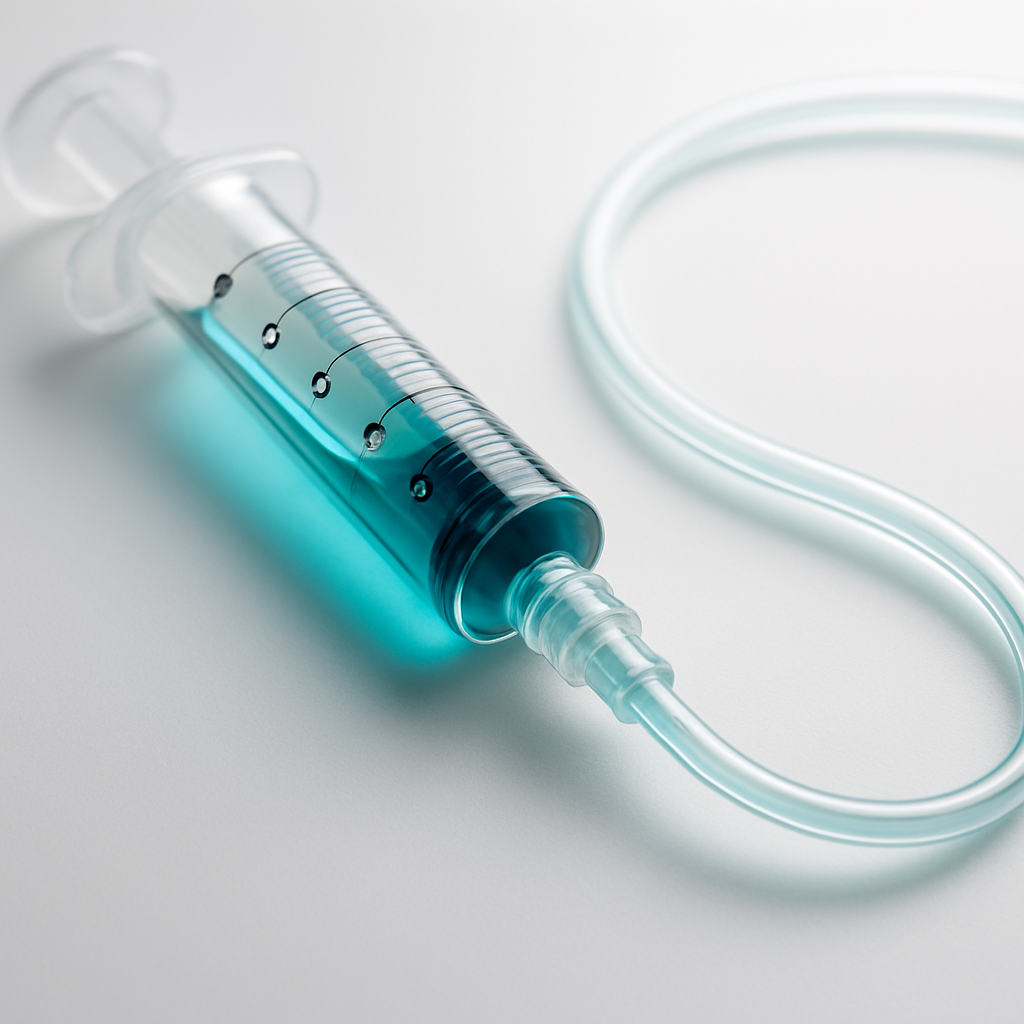
The first AquaPress was two syringes and a tube. See how it became a market-ready device.